
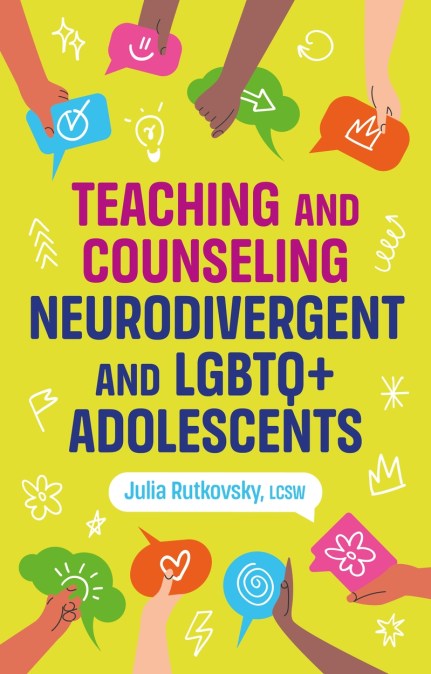
Teaching and Counseling Neurodivergent and LGBTQ+ Adolescents
Queer and neurodivergent students have their own unique set of needs in a classroom setting.
In this affirming guide, Julia Rutkovsky draws on her experience as a clinical social worker and psychotherapist to explain how education professionals can offer better support to neurodivergent and LGBTQ+ adolescents.
Bringing together insightful case studies, classroom activities, thinksheets and conversation guides, this book gives you all the necessary tools to create an affirming and supportive environment. Chapters include evolving language, common misconceptions, gifted and divergent thinking patterns and best practices for health curricula, allowing teachers and counsellors to develop deeper understandings of their students and clients.
Both informative and practical, this is an essential resource for teachers or counselors working with neurodivergent and LGBTQ+ adolescents.
In this affirming guide, Julia Rutkovsky draws on her experience as a clinical social worker and psychotherapist to explain how education professionals can offer better support to neurodivergent and LGBTQ+ adolescents.
Bringing together insightful case studies, classroom activities, thinksheets and conversation guides, this book gives you all the necessary tools to create an affirming and supportive environment. Chapters include evolving language, common misconceptions, gifted and divergent thinking patterns and best practices for health curricula, allowing teachers and counsellors to develop deeper understandings of their students and clients.
Both informative and practical, this is an essential resource for teachers or counselors working with neurodivergent and LGBTQ+ adolescents.
Reviews
Rutkovsky provides an approachable and practical resource to rethink existing frameworks for working with queer and neurodivergent young people. Clinicians and teachers will find applicable tools and activities along with valuable exploration of the overlaps in these populations. Rutkovsky's experience and care shine through this guide; the teachers, clinicians, and young people who come across it will surely benefit from her perspective.
A brilliant and much-needed exploration of the intersection between neurodivergence and queerness and the impact this has on young people. Packed with practical, realistic ideas, this is a must-read for everyone working with young people.
Neurodivergent and queer students have always been in our schools, and many of them experience the intersection of these identities. Rutvosky moves beyond explaining the experiences and needs of these students and provides educators and counselors with an actionable toolkit for supporting them. The impact of students who understand who they are and have adults in their lives who provide spaces for them to show up authentically is immeasurable. This book provides that roadmap for making this possible.